
Two-unit development
SB 9 can require ministerial approval for a qualifying housing development with up to two primary units in a single-family residential zone.
California lot split guide
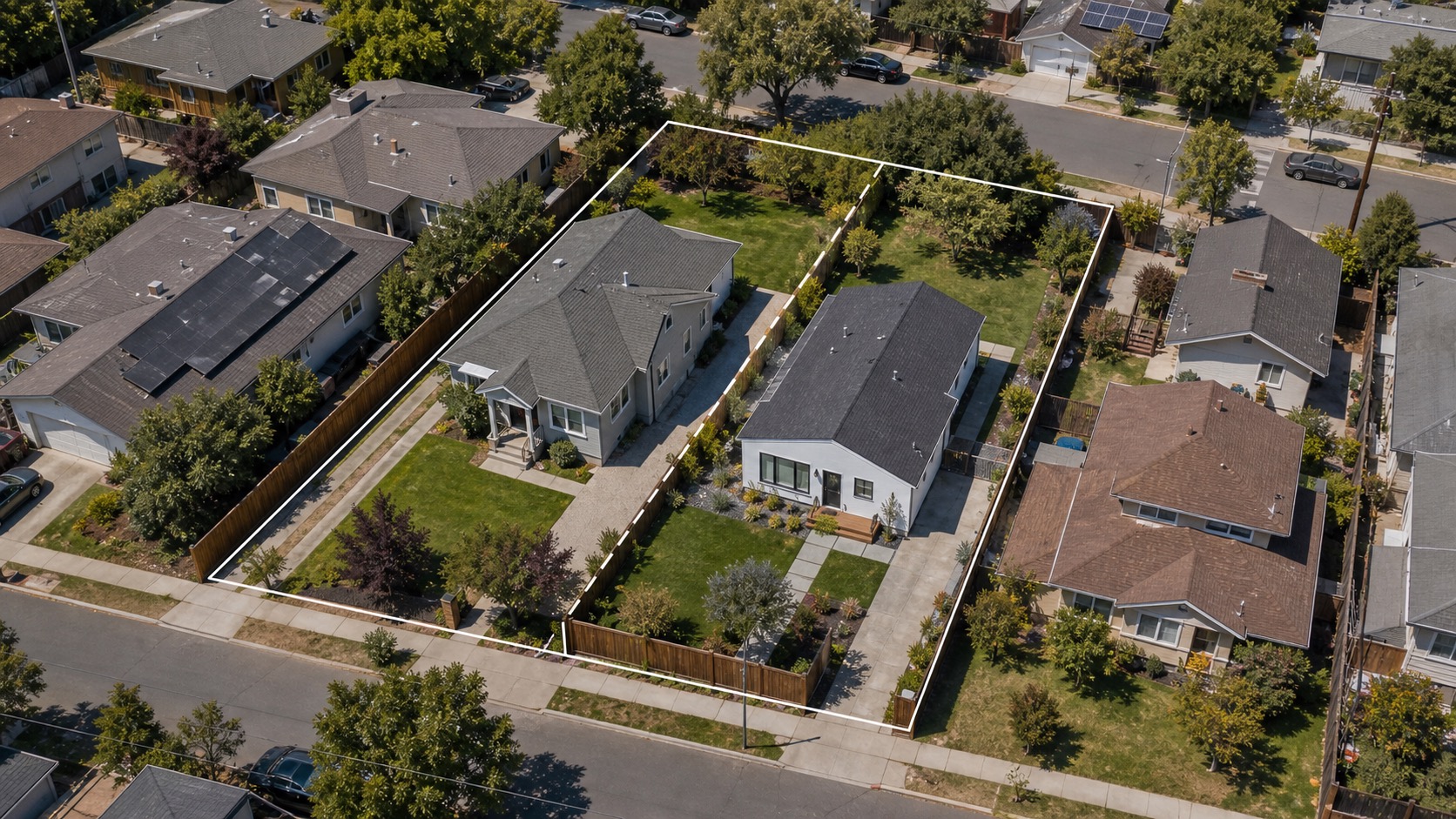
SB 9 can create a path for two primary units, an urban lot split, or both on qualifying single-family lots. It is powerful, but it is not automatic. The parcel exclusions and city process matter first.
Primary keyword
SB 9 California
Main use
Two units or lot split
Review model
Ministerial if eligible
Common blocker
Parcel exclusions
SB 9 map
The headline says lot split. The real screening starts with zoning, urbanized-area context, exclusions, objective standards, and whether the property should be compared against ADU paths instead.
SB 9 can require ministerial approval for a qualifying housing development with up to two primary units in a single-family residential zone.
A qualifying single-family lot in an urbanized area may be split into two lots when the official criteria are met.
Cities can apply objective zoning, subdivision, and design standards, but those standards cannot be used to block the protected minimum outcomes HCD describes.
Historic resources, recent tenant-occupied housing, Ellis Act history, and prior SB 9 splits can remove a property from the simple path.
For an urban lot split, HCD guidance describes an owner-occupancy affidavit for at least three years unless a statutory exception applies.
SB 9 is not the same as ADU law. It can interact with ADU planning, but it answers a different question about primary units and lot splits.
Property check
The free ADU Check is not a full SB 9 engineering report, but it is the right starting point for jurisdiction, city rules, and the next feasibility question.
Run free property checkADU vs SB 9
Many homeowners should compare SB 9 against a detached ADU, garage conversion, JADU, or city-specific ADU path before committing to survey and subdivision work.
Top questions
This guide summarizes official California HCD SB 9 guidance and HomeFeasible's city-rule workflow. It is planning research, not a subdivision approval, legal advice, survey, civil engineering study, or parcel-specific entitlement opinion.
Canonical URL: https://homefeasible.com/california-sb9-explained