
Plan check
The city reviews drawings and code compliance before permit issuance. Correction rounds can become the real cost driver because they add redesign time and delay.
California ADU cost guide
Permit cost is not one number. It is a stack of city fees, plan-check decisions, utility questions, waiver rules, and corrections. Start with the address, then decide which cost path actually applies.
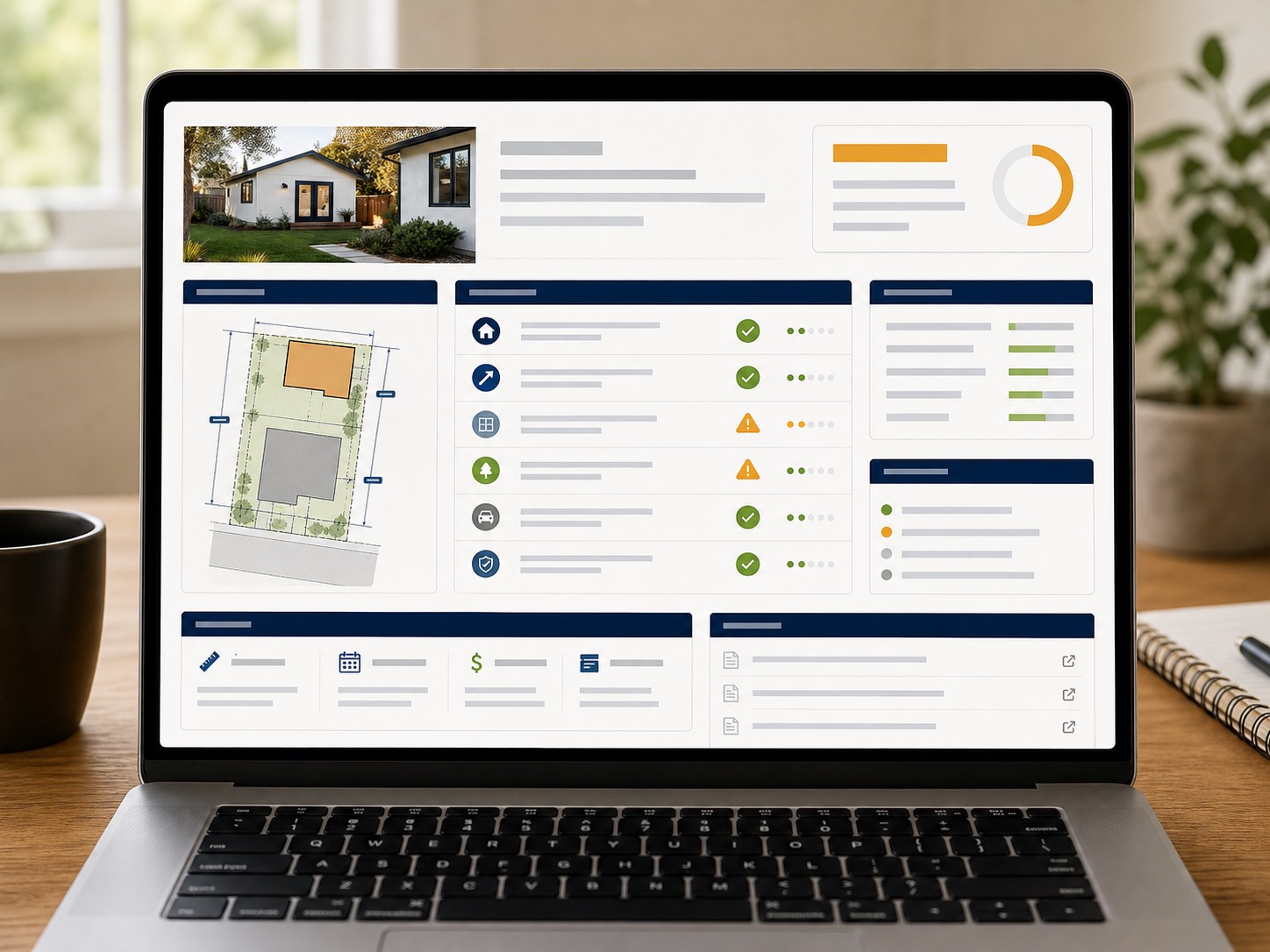
Primary keyword
ADU permit cost
Best first step
Confirm the city
Main cost driver
Local fee stack
Hidden risk
Plan-check corrections
Fee stack
Builder pages often quote a broad fee range. City directories often say fees vary. The useful middle ground is the fee stack: which parts of the permit path can create cost before the city issues approval.
The city reviews drawings and code compliance before permit issuance. Correction rounds can become the real cost driver because they add redesign time and delay.
The core construction authorization fee is usually tied to the city's fee schedule, valuation method, project scope, or permit classification.
Mechanical, electrical, and plumbing scopes can be separate permits or separate line items. Utility work often changes this part of the estimate.
Some fee categories may be limited, waived, or size-dependent. The answer is not universal; it depends on ADU size, city policy, and the official fee schedule.
Sewer, water, and electrical upgrades can sit outside the simple permit-fee headline. These become more important when the existing service is undersized.
A failed inspection, incomplete plan set, overlay review, or utility surprise can add rework and time even when the base permit fee looks manageable.
Free ADU Check
The address check matches the property to jurisdiction, ADU type, and stored city rules, so the permit-cost conversation starts from the right agency and review path.
Run free address checkCity examples
Los Angeles, San Diego, San Jose, Long Beach, and Oakland all show permit-cost search intent. Start with the city ADU rule page, then use the address check to narrow the actual fee path.
Process
Permit fees are not the first step. They become meaningful after the jurisdiction, ADU type, plan set, and review path are clear.
01
Start by matching the property to the right city or county. Permit cost searches fail when the wrong jurisdiction is assumed.
02
Detached, attached, conversion, garage conversion, and JADU projects can move through different review and fee paths.
03
A complete plan set gives the city something reviewable. An incomplete submittal creates avoidable correction loops.
04
The city reviews zoning, building, fire, utility, and local standards. This is where many cost surprises surface.
05
Fees are usually finalized before permit issuance, after the project scope and plan-check path are clear.
06
Construction inspections can add reinspection fees or rework when the build does not match the approved path.
Related guides
A garage conversion, detached backyard ADU, and JADU can create different permit questions. Use the guide that matches the project, then run the address check.
Top questions
This guide summarizes common permit-cost categories and the HomeFeasible city-rule workflow. It is planning research, not a city fee quote, city approval, or legal advice. Verify current fees with the local agency before making financial decisions.
Canonical URL: https://homefeasible.com/adu-permit-cost